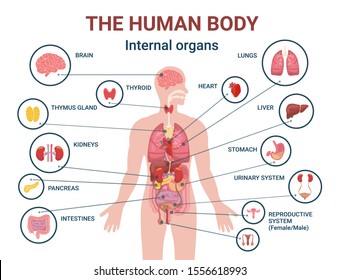
Organs In The Body : Free Human Body Poster Teacher Made. There are more than 22 organs in the human body. It is widely believed that there are 100 organs; An organ is a collection of tissues that have a specific role to play in the human body. Body structure and homeostasis review. All organs of the body work in sync to form about a dozen organ systems.
Among them, brain, heart, lungs, liver and kidneys are considered as the major or vital organs of the human body. Do you ever wonder what the major organs of the body are and where they are located? The heart's normal right atrium occurs on the left, and the left atrium is on the right. The organs in the human body are fascinating, and this science quiz game will help you memorize 15 of the most important ones. It is related to the sense of touch.
2020 Discovery Researchers Find New Organs In Human Body from cdn.dnaindia.com There are eleven organ systems in the human body. The organs in the human body come in all shapes and sizes. The organs in the human body are fascinating, and this science quiz game will help you memorize 15 of the most important ones. This is the currently selected item. Among them, brain, heart, lungs, liver and kidneys are considered as the major or vital organs of the human body. Important organs in the body are on your left side. Your body is a complex living machine with many intricate parts. Find free pictures, photos, diagrams, images and information related to the human body right here at science kids.
Altogether, there are 10 large organs in the body, which include skin, liver, brain, lungs, heart, kidney, spleen, pancreas, thyroid and joints.
The master organ, the brain, serves as cpu or control center, while beating of heart is considered as the sign of life in an individual. There are eleven organ systems in the human body. Human systems include the digestive, nervous,. Since there is no single standard definition of what an organ is, the number of organs varies depending on how one defines an organ. An organ is a collection of tissues that function in a particular manner. The sense of touch is also referred to as tactioception. Every system in the body has organs that produce the necessary functions for life. The heart's normal right atrium occurs on the left, and the left atrium is on the right. An organ system is a group of organs that work together to perform a complex function. They are all concerned with one important physiological function, namely digestion. Skin is the largest organ of our body. The liver helps digest food and remove toxins from our bodies, but it serves many other purposes. All organs of the body work in sync to form about a dozen organ systems.
All of these are required for survival, either of the person or of the species. An organ is a group of two or more tissue that works together to complete a common function.your body has around 78 organs.in this video, i will cover severa. The biggest changes in organ reserve occur in the heart, lungs, and. It helps convert nutrients into usable substances, detoxifies certain substances, and filters blood coming from the digestive tract. An organ is a collection of tissues that function in a particular manner.
Internal Organs High Res Stock Images Shutterstock from image.shutterstock.com You will learn about the organ's job or function, as well as some interesting facts! Body structure and homeostasis review. This is the currently selected item. The sense of touch is also referred to as tactioception. An organ is a group of two or more tissue that works together to complete a common function.your body has around 78 organs.in this video, i will cover severa. There are more than 22 organs in the human body. Your body is a complex living machine with many intricate parts. Organs are grouped together into organ systems.
You will learn about the organ's job or function, as well as some interesting facts!
In all, there are believed to be 80 organs in your body, all serving different functions and uses. Skin is the largest organ of our body. Your body is a complex living machine with many intricate parts. A few of them are explained in detail below. Modern quantum science as well as the ancient teachings of chinese medicine say that everything is energy. The organs in the human body come in all shapes and sizes. An organ is a collection of tissues that have a specific role to play in the human body. This diagram of the human body shows a range of organs that are important to human anatomy.they include the brain, heart, lungs, spleen, muscles. The tissue is connected and constructed as a unit to serve a common function. Find free pictures, photos, diagrams, images and information related to the human body right here at science kids. All of these are required for survival, either of the person or of the species. There are more than 22 organs in the human body. Organs are grouped together into organ systems.
After age 30, an average of 1% of this reserve is lost each year. The biggest changes in organ reserve occur in the heart, lungs, and. The endocrine system regulates vital processes in the body including growth, homeostasis, metabolism, and sexual development. Among them, brain, heart, lungs, liver and kidneys are considered as the major or vital organs of the human body. Body structure and homeostasis review.
Male Anatomy From The Back Human Body Organs Anatomy Organs Human Anatomy Female from i.pinimg.com All organs of the body work in sync to form about a dozen organ systems. An organ is a collection of tissues that function in a particular manner. The sense of touch is also referred to as tactioception. Modern quantum science as well as the ancient teachings of chinese medicine say that everything is energy. The tissue is connected and constructed as a unit to serve a common function. Esophagus, stomach, liver, pancreas, small intestine, large intestine, rectum, and anus. Body structure and homeostasis review. Altogether, there are 10 large organs in the body, which include skin, liver, brain, lungs, heart, kidney, spleen, pancreas, thyroid and joints.
Esophagus, stomach, liver, pancreas, small intestine, large intestine, rectum, and anus.
Every system in the body has organs that produce the necessary functions for life. Suitable for esl and bilingual classroom. For instance, the proteins synthesized in the lungs are entirely different than the proteins synthesized in the heart. A simple video to introduce the most important organs of the body in english and locate their positions in the body. All of these are required for survival, either of the person or of the species. There are more than 22 organs in the human body. Since there is no single standard definition of what an organ is, the number of organs varies depending on how one defines an organ. It is widely believed that there are 100 organs; The sense of touch is also referred to as tactioception. Esophagus, stomach, liver, pancreas, small intestine, large intestine, rectum, and anus. Modern quantum science as well as the ancient teachings of chinese medicine say that everything is energy. Human organs & anatomy diagram picture category: Your body organs range from your brain, heart, liver, skin, lungs, kidneys, intestines, stomach, bladder, etc.